SEE IT BEFORE YOU BUY IT
Most consulting firms ask you to trust their track record. We'd rather show you what we can do, on your floor, with your team, on your data. The Walkthrough is a 3–5 day operational assessment that delivers real findings before any engagement begins.
Complimentary consulting fees. Client covers travel-related expenses.*
WHAT THE WALKTHROUGH ACTUALLY IS
THE WALKTHROUGH IS
- A structured operational assessment using the Bismark Method lens
- 3–5 days on-site with your team, your data, your operations
- Led by senior practitioners who've run these operations
- An honest read of where you are, including what's working
THE WALKTHROUGH ISN'T
- A sales presentation disguised as analysis
- A remote desk review of your annual report
- Staffed by junior analysts learning on your dime
- A tear-down designed to manufacture urgency
We've conducted these assessments for over 25 years. We've never completed one without identifying significant, quantifiable improvement opportunities. Not because we're looking for problems, but because operational complexity always creates them.
WHAT HAPPENS DURING YOUR WALKTHROUGH
STAKEHOLDER ENGAGEMENT
DATA & DOCUMENTATION
OPERATIONAL OBSERVATION
FINDINGS & RECOMMENDATION
STAKEHOLDER ENGAGEMENT
DATA & DOCUMENTATION
OPERATIONAL OBSERVATION
FINDINGS & RECOMMENDATION

Stakeholder Engagement
We meet with executives, operations leaders, and frontline managers. Not to pitch, but to listen. We need to understand your strategic objectives, the performance targets you're measured against, and the operational reality behind the reports. This is a deep discovery conversation, not a slideshow.

Data & Documentation Analysis
We dig into your operational data, performance metrics, and process documentation. We're looking for the patterns, disconnects, and bottlenecks that live in the gaps between what's reported and what's real. This is where the Bismark Method lens does its heaviest lifting. We know what to look for because we've seen it hundreds of times.

Operational Observation
We go to the floor, the desks, the systems. We watch your operations in action and talk to the people doing the work. There is no substitute for direct observation. Reports tell you what happened, observation tells you why.
Findings & Recommendation
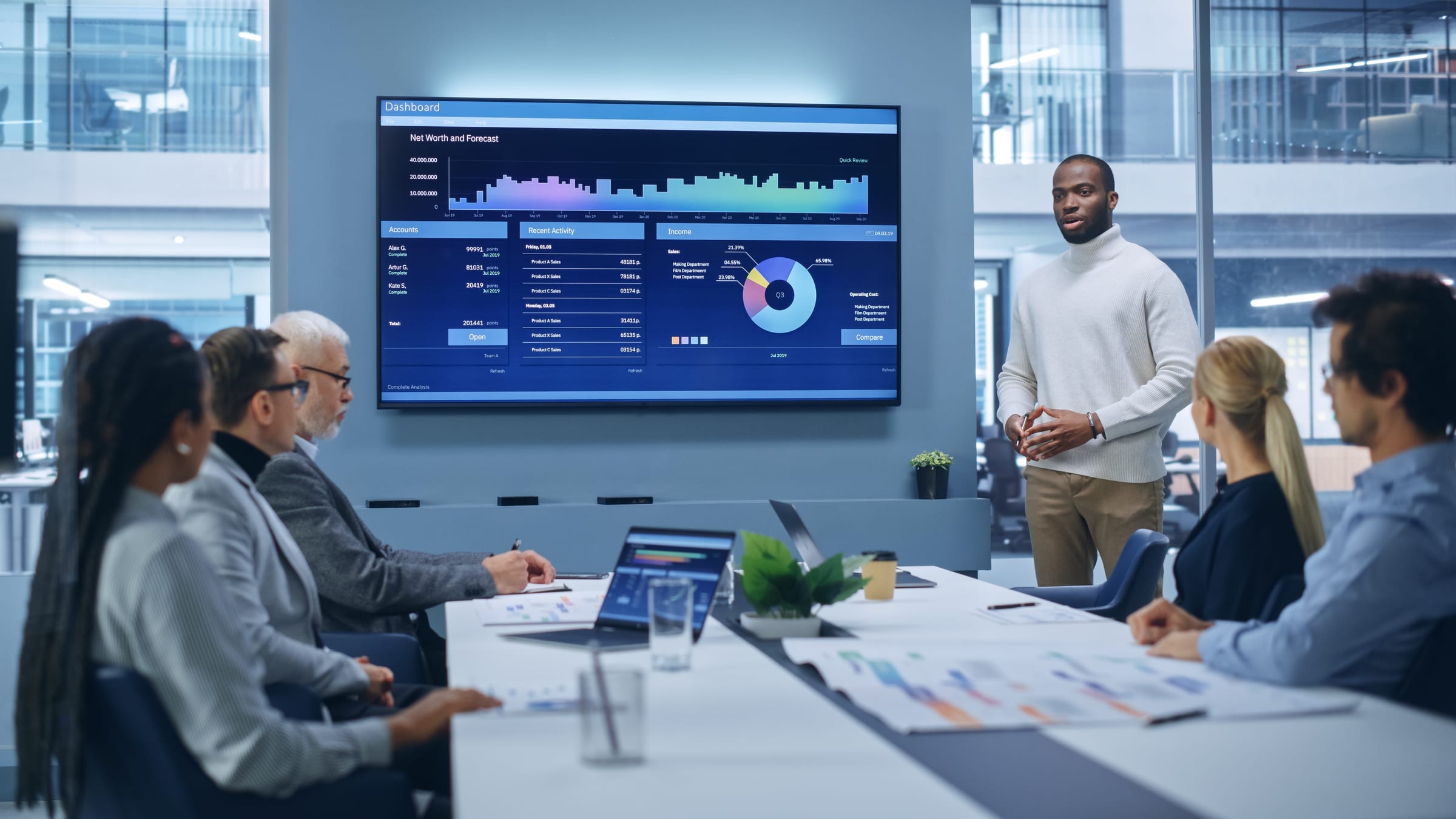
We deliver an Executive Summary with Data Exhibits, in both written and oral presentation to your leadership team. This is not a vague deck of observations. It includes quantified findings, specific improvement opportunities, and projected financial impact.
PATH A — DISCOVERY PROPOSAL (PHASE 1)
When the walkthrough identifies complex, interconnected opportunities that require deeper diagnostic work before implementation design. Discovery is a paid 4-week engagement that produces the full transformation blueprint.
PATH B — DIRECT TO IMPLEMENTATION (DTI)
When the walkthrough reveals that the operational picture is clear enough: the diagnosis is confirmed, the organization has the foundation, and the path is evident. A DTI engagement skips the extended discovery phase and moves directly into implementation design and deployment. This isn't a shortcut. It's a recognition that some organizations are further along than they realize.
The walkthrough always tells us which path is right. We don't decide in advance. The data does.
WHO GETS THE MOST FROM THE WALKTHROUGH
The Walkthrough delivers the most value for organizations that share a few characteristics. Not because we're selective for its own sake — but because the Bismark Method works best when these conditions are present.
ESTABLISHED OPERATIONS AT SCALE
You're past the startup phase. You have real operational infrastructure — processes, teams, systems, data — and you're looking to optimize what exists, not build from scratch. Typically $100M+ in revenue, though the real qualifier is operational complexity, not a number.
EXECUTIVE SPONSORSHIP
Someone at the C-suite or senior VP level is driving this. Not because they're the only stakeholder, but because the Bismark Method requires enterprise-wide visibility and the authority to act on what we find. This can't live in a single department.
WILLINGNESS TO INVEST IN TRANSFORMATION
Our engagements typically start at $300K per identified end-to-end process because the scope demands it. The Bismark Method delivers 3–10x return within 18–24 months, with your team owning the method after approximately 16 weeks of implementation. That requires committed investment in both dollars and organizational attention. If you're looking for a quick fix or a benchmarking exercise, we're not the right fit.
A CULTURE OF LEARNING, NOT JUST OUTSOURCING
The Bismark Method is built on knowledge transfer. We don't do the work for you and leave. We build capability into your organization. That means your team needs to be willing to learn, participate, and own the results. This is the single biggest predictor of sustained success.
The method is built around operational processes, not industry labels. If your organization runs claims processing, policy administration, customer service operations, payment processing, loan origination, compliance workflows, or contact center operations, the walkthrough will find value. Industries & Services →
GETTING READY FOR YOUR WALKTHROUGH
You don't need to prepare a formal package. But the more access and context you provide upfront, the more value the walkthrough delivers from day one. Here's what helps us hit the ground running.
STAKEHOLDER AVAILABILITY
Block time for 3–5 key leaders across the walkthrough window. We'll need 60–90 minutes with each, and ideally a 2-hour block with the executive sponsor on day one and again for the findings presentation.
OPERATIONAL DATA
Share what you can in advance. We'll send a specific data request after the discovery call, but the basics include: current performance dashboards and KPI reports, process documentation or workflow maps (whatever exists, perfection not required), org charts for the operational areas in scope, and any recent audit, assessment, or consulting reports.
PHYSICAL & SYSTEM ACCESS
We need to be where the work happens. That means floor access, desk access, and ideally observer-level access to the systems your teams use daily. Visitor badging, NDAs, and security requirements. We're used to all of it.
AN OPEN MIND
The walkthrough works best when leaders are genuinely curious about what we'll find, including the uncomfortable parts. We're not here to confirm what you already believe. We're here to show you what you can't see from the inside.
START THE CONVERSATION
READY TO START?
The first step is a 30–45 minute call where we discuss your operational landscape, confirm mutual fit, and schedule your on-site walkthrough. This isn't a sales call. It's the same rigor in miniature. Come ready to talk about your operations, and we'll come ready to listen.
Click below to choose a time that works for you.
Prefer email? Reach us at info@bismarkconsulting.net
THE CONSULTING IS COMPLIMENTARY. THE INSIGHT IS IMMEDIATE. THE DECISION IS YOURS.
TYPICAL ENGAGEMENT ROI: 3–10X RETURN WITHIN 18–24 MONTHS